
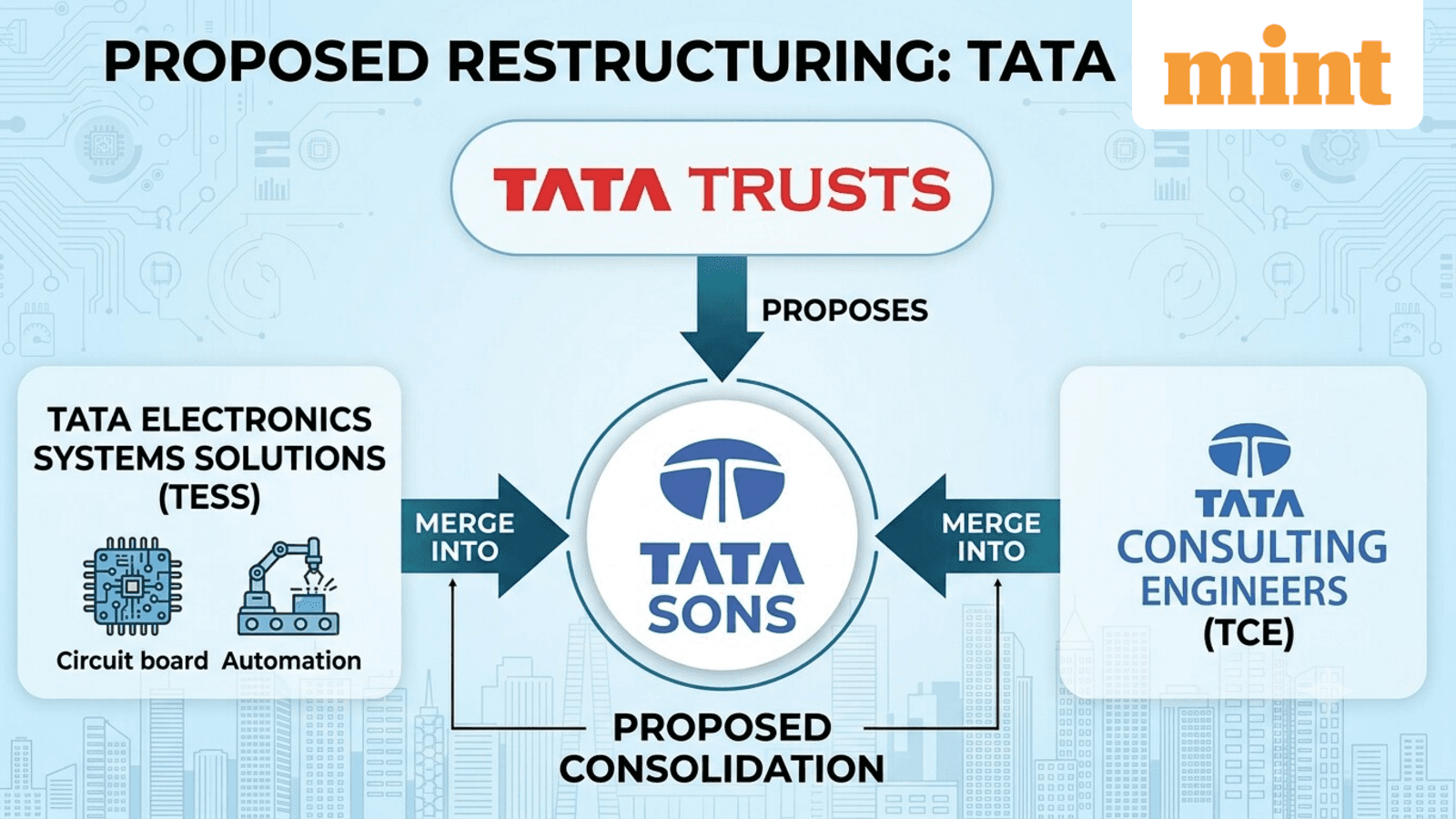
Strategic Consolidation: Tata Electronics Set for Major Restructuring via Tata Sons Merger
In a move that signals a significant shift in the corporate architecture of India’s most storied conglomerate, Tata Electronics is set to undergo a major restructuring. The company has announced a proposed merger with its parent entity, Tata Sons, a strategic decision aimed at streamlining operations and optimizing the group’s regulatory standing.
This consolidation is not merely an internal administrative change; it is a calculated maneuver to recalibrate the company’s financial classification. By integrating Tata Electronics directly into the fold of Tata Sons, the group intends to remove the entity from the regulatory oversight associated with Non-Banking Financial Company (NBFC) and Core Investment Company (CIC) classifications. This shift is expected to provide the electronics arm with greater operational agility and a more streamlined path for future capital allocation as it scales its manufacturing footprint.
For the broader Indian manufacturing ecosystem, this merger underscores the Tata Group’s commitment to its electronics vertical. As the nation pushes to become a global hub for semiconductor and component manufacturing, Tata Electronics has emerged as a cornerstone of this ambition. By moving away from the restrictive frameworks of CICs, the company can focus more effectively on its core mission: scaling high-tech manufacturing capabilities and deepening its integration into global supply chains.
Industry analysts view this as a proactive step in corporate governance. Removing the NBFC/CIC tag simplifies the balance sheet and reduces the compliance burden that often accompanies such classifications. As Tata Electronics continues to ramp up its facilities, this merger ensures that the entity remains lean, focused, and unencumbered by financial holding company regulations that were never intended for a high-growth manufacturing powerhouse.
As the deal progresses, all eyes will be on how this structural change influences the company’s investment capacity and its ability to attract further partnerships in the semiconductor and electronics space. For now, the move stands as a testament to the Tata Group’s ability to evolve its corporate structure to meet the demands of a rapidly changing industrial landscape.