
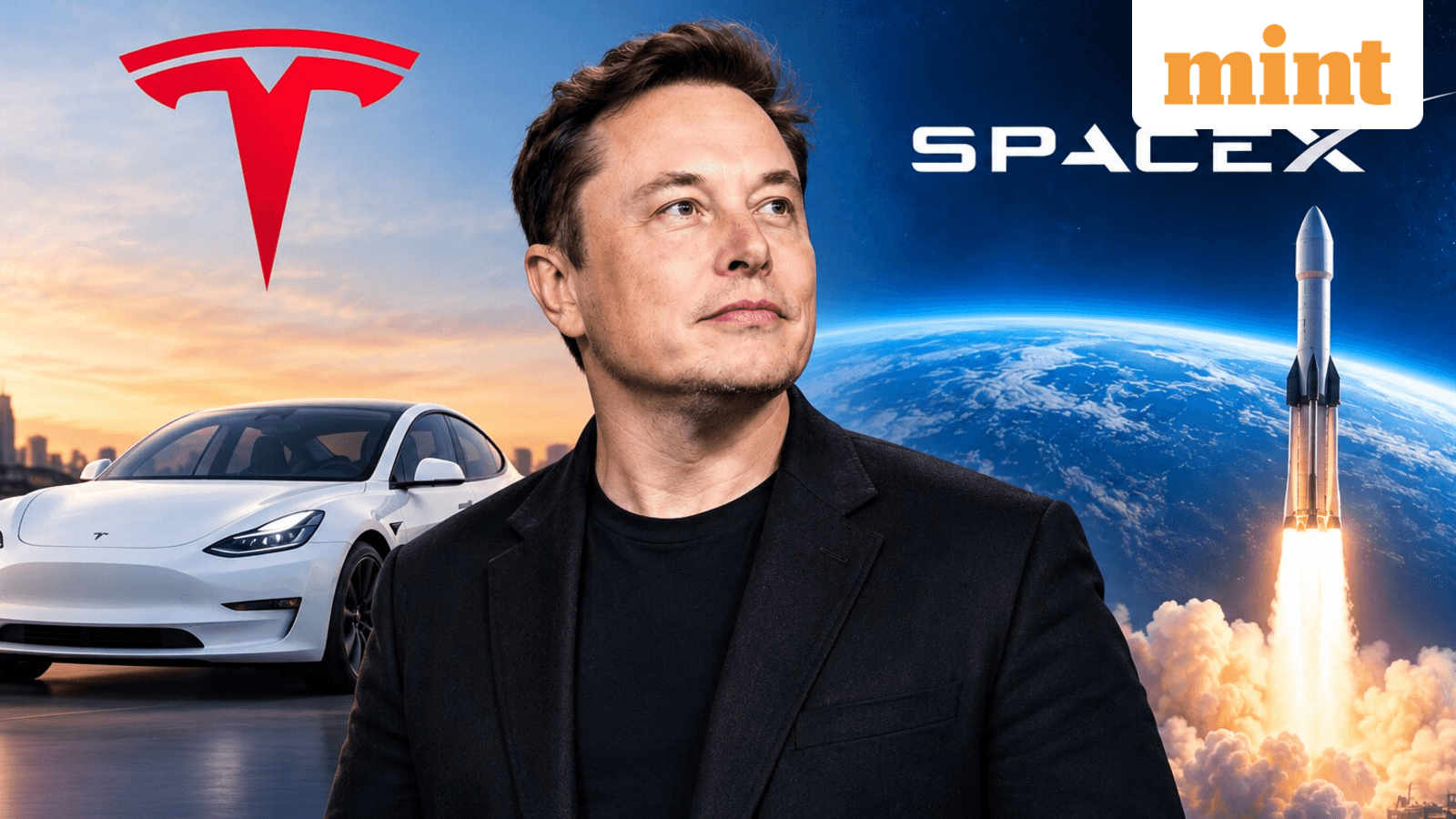
The $3.5 Trillion Colossus: Tesla and SpaceX Explore Unprecedented Merger
In a move that has sent shockwaves through global financial markets and the technology sector, industry titans Tesla and SpaceX have reportedly begun evaluating a potential merger. This strategic exploration, if realized, would consolidate the world’s leading electric vehicle manufacturer and the dominant force in private aerospace into a single, monolithic enterprise with an estimated valuation of $3.5 trillion.
The prospect of combining Elon Musk’s two flagship companies represents a paradigm shift in how we perceive industrial conglomerates. By integrating Tesla’s expertise in battery technology, artificial intelligence, and large-scale manufacturing with SpaceX’s prowess in orbital logistics and satellite communications, the resulting entity would effectively control the entire vertical stack of future transportation—from the roads of Earth to the reaches of low-Earth orbit and beyond.
Synergy Beyond Earth
Analysts are already debating the potential synergies of such a massive consolidation. Beyond the obvious cross-pollination of engineering talent, a merged entity would possess an unparalleled supply chain advantage. Tesla’s advancements in material science and autonomous software could significantly accelerate SpaceX’s Starship development, while SpaceX’s Starlink network could provide the backbone for Tesla’s global autonomous driving fleet. This is not merely a merger of two companies; it is the creation of a vertically integrated infrastructure provider for the next century.
However, the path to such a deal is fraught with complexity. Regulatory scrutiny in the United States will be intense, as antitrust authorities will undoubtedly examine the implications of a single entity dominating both the automotive and aerospace sectors. Furthermore, the governance structure of a $3.5 trillion company would require a complete overhaul of current corporate standards.
As the industry watches closely, the conversation has shifted from "if" these companies can innovate to "how" they will redefine the boundaries of human industry. Whether this merger proceeds or remains a strategic evaluation, it underscores a clear trend: the future of technology belongs to those who can bridge the gap between terrestrial mobility and the final frontier.